

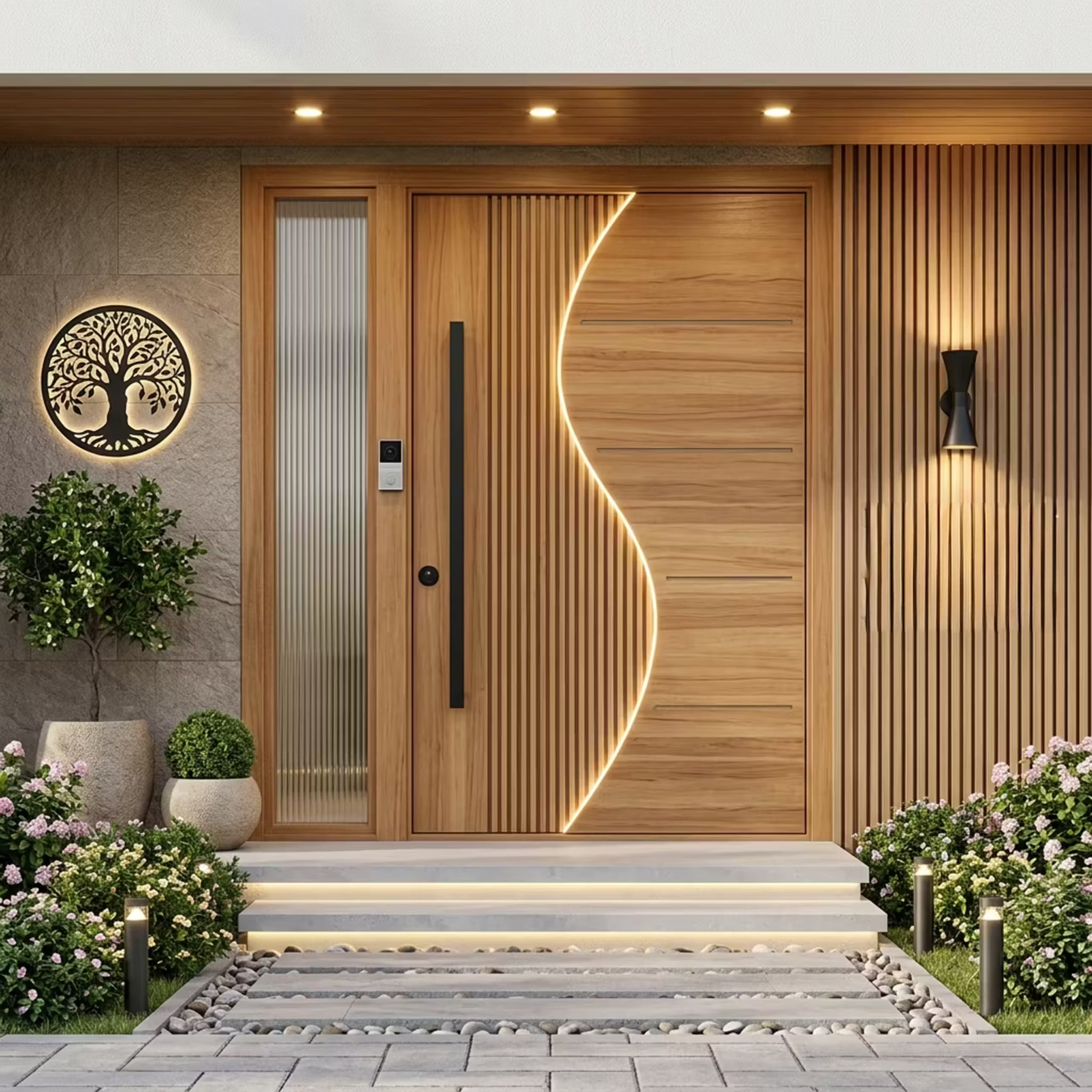
Interior doors are often treated as purely functional features, but they can have a surprisingly strong influence on the character of a home. Because doors appear repeatedly throughout hallways, bedrooms, living spaces, offices, and bathrooms, their design can either connect the interior or make each room feel disconnected. Choosing a door style that works with your existing décor is therefore an important part of creating a polished home.
The best Modern interior doors do more than look contemporary. They complement flooring, walls, furniture, lighting, architectural details, and hardware while providing the privacy and practicality each room requires.
Start by Identifying Your Home’s Style
Before selecting a door, look at the overall design language of your home. Consider whether your rooms are minimalist, Scandinavian, industrial, traditional, transitional, rustic, or distinctly contemporary.
A modern door should support the character that already exists rather than competing with it. For example, a simple flush door can blend beautifully with a minimalist interior, while a warmer wood finish may be more appropriate when the home contains natural flooring and furniture.
Taking a few minutes to identify your dominant style can make the selection process considerably easier.
Choose Flush Doors for Minimalist Interiors
Minimalist homes usually benefit from doors with simple surfaces and limited decoration. Flush doors are particularly effective because their flat appearance creates clean visual lines without unnecessary details.
For a minimalist interior, consider:
- Smooth, flat door surfaces
- White, soft grey, beige, or natural wood finishes
- Simple rectangular profiles
- Minimal handles
- Concealed or understated hardware
A door that blends closely with the wall can create an especially seamless appearance, helping the architecture rather than the door itself become the focus.
Use Natural Wood for Warm Modern Homes
Modern design does not have to feel cold. Natural wood can introduce warmth and texture while maintaining a contemporary appearance.
Light oak, ash, walnut, and similar finishes can work well with modern furniture, neutral walls, wood flooring, and natural textiles. The key is choosing a finish that complements the existing wood tones instead of introducing too many competing colours.
If your home already contains wooden flooring or cabinetry, compare the undertones before choosing your doors. Warm woods generally work best with other warm finishes, while cooler or pale woods can complement cleaner contemporary palettes.
Match Door Colours With Walls and Trim
Colour is one of the easiest ways to make interior doors feel connected to the rest of a home.
White doors remain highly versatile because they can blend with light walls and traditional trim while still working in contemporary rooms. Darker doors, such as charcoal or black, can create a stronger architectural statement and work particularly well when dark accents appear elsewhere in the room.
You do not necessarily need to match the door colour exactly to your walls. Instead, consider whether the colours have a harmonious relationship.
For example, a dark door against a pale wall can provide contrast, while a similarly coloured door and wall can create a quieter, more seamless appearance.
Consider Shaker Doors for Transitional Homes
Transitional interiors combine traditional details with contemporary simplicity. If your home falls somewhere between classic and modern, a simple Shaker-style door can be an excellent compromise.
A clean one-panel or two-panel design provides enough detail to complement traditional elements without appearing overly decorative. It can work with modern furniture, classic trim, neutral colours, and natural wood finishes.
This makes transitional doors particularly useful when the architectural style of the home does not fit neatly into one category.
Choose Glass When You Want More Light
Glass-panel doors can be useful in modern homes where maintaining natural light is important. They can visually connect spaces while still creating separation between rooms.
Clear glass can work for areas where privacy is not a major concern, while frosted, textured, or reeded glass can provide a balance between light transmission and privacy.
Glass doors can be particularly effective between:
- Kitchens and dining areas
- Hallways and home offices
- Living rooms and studies
- Interior spaces with limited natural light
The frame and glass pattern should still reflect the rest of the home’s design. Slim dark frames, for example, can reinforce an industrial or contemporary aesthetic.
Match Hardware With the Overall Design
A beautiful door can lose some of its impact when the hardware feels unrelated to the room.
Modern interiors often benefit from simple lever handles, streamlined pulls, or minimalist hardware. Matte black, brushed nickel, stainless steel, and selected brass finishes can all work, depending on the surrounding fixtures.
Look at other hardware throughout the home, including cabinet handles, light fixtures, faucets, and bathroom accessories. Repeating a finish can create visual continuity.
However, everything does not have to be identical. The goal is coordination rather than excessive matching.
Think About Door Frames and Trim
The door slab is only one part of the overall design. Frames, casing, architraves, and skirting can dramatically change how the finished door looks.
For a contemporary home, narrow or simple trim can preserve clean lines. More substantial decorative casing may be appropriate when the home has traditional architectural details.
If you are replacing several doors, consider the entire opening rather than choosing the door slab alone. The relationship between the door, frame, wall, and floor will determine how cohesive the result feels.
Match Doors to the Room’s Function
Style should never be the only consideration. Different rooms have different practical requirements.
Bedrooms generally benefit from solid doors that provide privacy and help reduce noise. Bathrooms require materials and finishes appropriate for humid conditions. Home offices may benefit from doors that improve acoustic separation, while closets and smaller spaces can sometimes benefit from sliding or pocket-door systems.
Modern door designs can therefore be selected according to both appearance and performance.
Keep Multiple Doors Visually Connected
If several doors are visible from one hallway or open-plan area, consistency becomes especially important. They do not have to be completely identical, but they should share certain characteristics.
You might use the same:
- Door height
- Basic profile
- Finish family
- Hardware finish
- Frame style
A feature door can then be introduced in a bedroom, office, or other important space without making the home feel visually disjointed.
Create Contrast When You Want a Statement
Matching does not mean making every door disappear. Sometimes contrast is exactly what a room needs.
A black or deep walnut door against pale walls can become an architectural feature. Similarly, a natural wood door can add warmth to a predominantly white interior.
The key is repetition. If you introduce a bold finish, consider echoing that colour or material somewhere else in the room through furniture, lighting, shelving, or accessories.
Avoid Choosing Doors in Isolation
One of the most common mistakes is selecting a door simply because it looks attractive in a showroom or photograph.
A door may look excellent by itself but feel wrong once installed beside your flooring, walls, furniture, and trim. Always consider the complete room.
Ask yourself:
Does the finish complement my flooring?
Does the design work with my furniture?
Will the hardware coordinate with other fixtures?
Does the door suit the home’s architectural character?
Will the same style work throughout connected areas?
These questions can prevent expensive design mistakes.
The Right Modern Door Creates a Cohesive Interior
Choosing the right interior door is ultimately about creating harmony. A successful door should feel as though it naturally belongs in the home rather than appearing as an unrelated addition.
For minimalist interiors, prioritize clean flush designs. For warm contemporary homes, consider natural wood. Transitional spaces can benefit from restrained panel designs, while industrial rooms may suit darker finishes and glass or metal details.
Most importantly, think beyond individual rooms. Modern interior doors should help create a consistent visual journey throughout the house while still providing the privacy, durability, light control, and functionality each space requires. With the right combination of style, colour, material, hardware, and proportions, interior doors can become one of the subtle details that makes an entire home feel thoughtfully designed.
